Diwali Without Alcohol: How to Celebrate Sober
Published Monday, 2 November 2026 · 8 min read
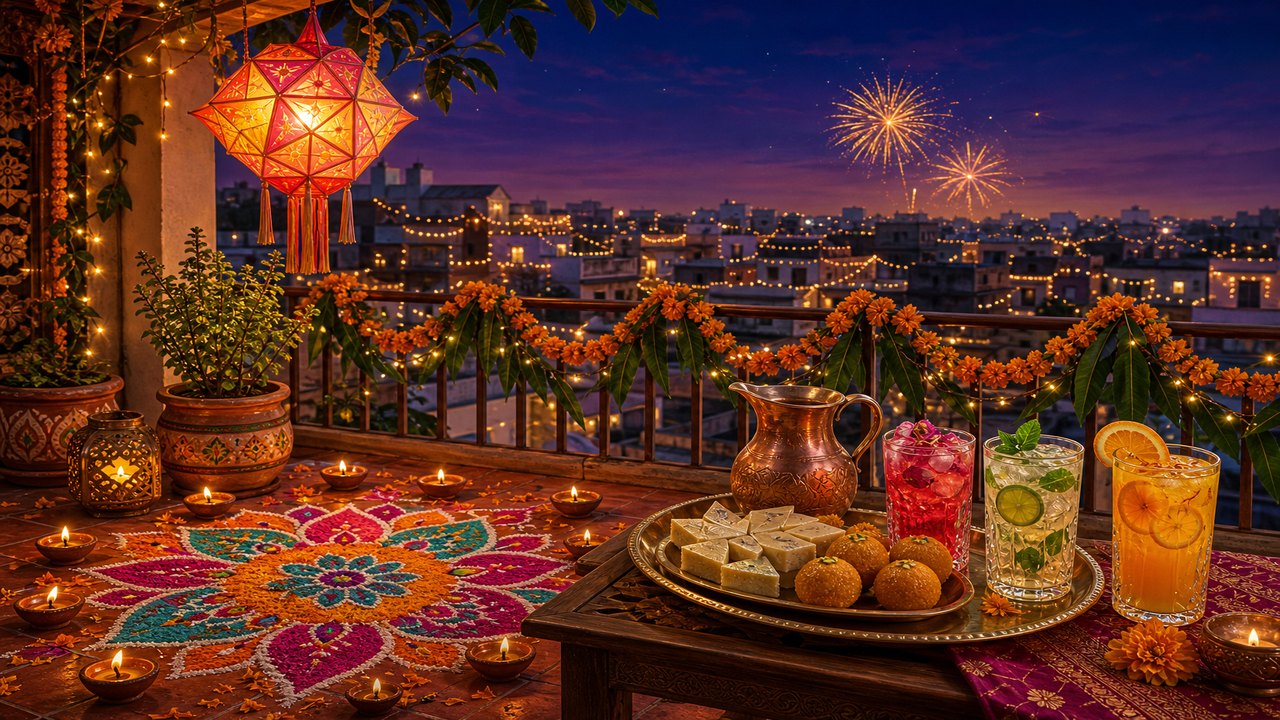
Diwali is the festival of lights, family, sweets and long evenings with people you love. For a lot of households, it has also quietly become a festival of whisky at the card table, bottles exchanged as gifts and “one peg for the festival” from an uncle who won’t take no for an answer. If you’ve stopped drinking, or you’re taking a break, the season can feel like a test. It doesn’t have to be. This guide covers the real situations, from card nights to gift boxes to the questions at dinner, with simple plans and lines you can actually use.
A quick, important note. This is general information, not medical advice. If you’ve been drinking heavily or daily, stopping suddenly can cause alcohol withdrawal, which can be dangerous. Talk to a doctor before you stop. Shaking, heavy sweating, a racing heart, confusion, seeing or hearing things that aren’t there, or seizures need urgent medical care.
Why Diwali can be tricky when you’re sober
Diwali itself has nothing to do with alcohol. It’s about light winning over darkness, new beginnings and gratitude. But the weeks around it pack in a lot of the things that make staying sober harder:
- Back-to-back gatherings. Office parties, society events, cousins’ homes and card nights can stack up over a couple of weeks.
- Card parties. In many circles, the teen patti or rummy table comes with a bottle in the middle, and drinking is treated as part of the game.
- Bottles as gifts. Whisky and wine are common corporate and family gifts, so alcohol may arrive at your door whether you want it or not.
- Family pressure. Relatives who haven’t seen you in a year may push, joke or ask questions you don’t want to answer in front of everyone.
- Late nights and broken routines. Less sleep, rich food and travel can leave you tired, and tiredness makes cravings louder.
Knowing these in advance is half the work. The other half is a plan for each one.
Make a plan before the festival week
Most slips happen in the moment, when you haven’t decided what you’ll do. A little planning a few days before removes most of those moments.
- List every event. Write down each gathering from Dhanteras to Bhai Dooj, and any office or society party around it. Mark the ones where alcohol is likely.
- Decide your role at each one. Will you stay for dinner and leave before the cards come out? Arrive early to help with puja and rangoli? Host your own instead? Choosing in advance is far easier than choosing at 11 pm.
- Sort your transport. Being the one who drives is a simple, widely accepted reason not to drink. Having your own way home also means you can leave when you want.
- Pick one ally. A sibling, cousin or friend who knows you’re not drinking can steer conversations, hand you a soft drink and back you up.
- Protect your sleep where you can. If one night runs late, keep the next morning slow. Our guide to how your sleep changes after quitting alcohol explains why rest matters so much early on.
Card nights without the bottle
Card parties are often the hardest Diwali setting, because drinking is woven into the game and nights run long. A few things help:
- Hold your own drink from the start. A glass of nimbu soda, cola or jaljeera in your hand means fewer offers. Refill it before it’s empty.
- Play, don’t host the bar. If you’re at home, let someone else handle drinks for the guests who want them, or simply don’t provide alcohol. It’s your home.
- Set a stop time. Decide when you’ll fold your last hand. Late nights are when willpower runs thin and “just one” sounds harmless.
- Watch the money, too. If gambling is part of your card night and it worries you, set a fixed amount you won’t go over, or play for matchsticks. Drinking and betting together can make both harder to control.
- Start a new tradition. A dessert round, a chai break at midnight or a board game for the kids’ table gives the evening a rhythm that isn’t built around the bottle.
What to say when someone offers you a drink
You don’t owe anyone a full explanation, especially at a festival. Short, friendly and repeatable works best. Pick one or two lines that feel natural to you:
- “I’m good with this, thanks.” (Raise your glass and change the subject.)
- “I’m driving tonight.”
- “I’ve stopped drinking. I feel much better for it.”
- “Not tonight. Pass me the kaju katli instead.”
- “I’m doing a health thing this month.”
If an elder keeps pushing, a respectful, warm line usually lands better than an argument: “Uncle, I’m happy with my sherbet. You enjoy.” Then move to another room, help in the kitchen or find your ally. Saying the same line calmly two or three times is enough; most people stop after that.
Let your festival days count.
Sober Tracker counts your sober days from the start date you choose and marks each one on a calendar, so you can see the whole festival week stay clear. Your current streak sits next to your best streak, and a gentle daily check-in notification gives you a calm moment each day. Download Sober Tracker on the App Store.
When alcohol arrives as a Diwali gift
Getting a bottle in a gift hamper can sting when you’re working hard not to drink. You have options, and none of them is rude:
- Get it out of the house quickly. Pass it to a friend or relative who drinks, or give it away that same day. A bottle in the cupboard is easier to reach for on a bad evening.
- Tell close people in advance. A quick message to family or your team, such as “I’m not drinking these days, so sweets or dry fruits would be lovely,” saves everyone an awkward moment.
- Give alcohol-free gifts yourself. Mithai, dry fruits, candles, diyas, plants, good tea or coffee, and premium juice or sparkling drinks all make generous gifts. You’re quietly setting a new norm.
Festive drinks that feel special
Half the pull of a drink at a celebration is having something nice in your hand. Indian kitchens are full of drinks that feel festive without alcohol:
- Thandai. Chilled milk with nuts, fennel, cardamom, rose and saffron. Rich, celebratory and easy to make ahead.
- Rose sherbet. Rose syrup with cold water or soda, a squeeze of lime and crushed ice.
- Masala nimbu soda. Fresh lime, chaat masala, black salt and soda, sweet or salted.
- Kokum or jaljeera cooler. Tangy, a little spicy, and good after a heavy meal.
- Aam panna spritz. Raw-mango panna topped with sparkling water and mint.
- Kesar-elaichi milk. Warm saffron and cardamom milk for the end of a long night.
Serve yours in a nice glass with ice and garnish, and it looks like it belongs at the party. If evenings at home are the harder part, our list of alcohol-free evening rituals that actually help has more ideas.
Lean into what Diwali is really about
One of the gifts of a sober Diwali is that you’re fully there for it. You remember the conversations, the lights, the kids’ faces at the fireworks and the taste of the sweets. Some ways to fill the time that alcohol used to take up:
- Spend an afternoon making a big rangoli with family or neighbours.
- Light diyas slowly and properly, and take a quiet minute on the balcony afterwards.
- Cook or bake a family recipe and give boxes to neighbours.
- Visit people in the daytime, when gatherings are about food and family rather than drinks.
- Wake up early the morning after, clear-headed, and enjoy a slow breakfast while others are still asleep.
Diwali is also a festival of new beginnings, which makes it a meaningful moment to mark your sobriety. If you’re just starting, our guide to what happens in your first 7 days sober walks through what to expect.
If you slip during the festival
Festivals are intense, and slips happen. One drink at a card table doesn’t erase every sober day before it. Be honest with yourself, think about what led up to it (a person, a time of night, being tired or hungry), and decide what you’ll do differently at the next gathering. Then reset and carry on. We wrote about why a relapse doesn’t erase your progress, and it’s worth a read if the morning after feels heavy.
When to talk to a doctor
Please get medical advice if:
- You’ve been drinking heavily or daily, or have had withdrawal symptoms such as shakes or sweats when you’ve stopped before.
- You feel shaky, sweaty, anxious or unwell in the first few days after stopping.
- You keep drinking at gatherings even though you planned not to.
- You’re drinking to cope with stress, low mood, loneliness or family tension.
- You have thoughts of harming yourself. If so, contact a crisis line or emergency services now.
How Sober Tracker can help
Sober Tracker for iPhone keeps the festival week simple. It counts your sober days from the start date you choose and shows your current streak alongside your best streak. The calendar of sober days lets you see every gathering you got through, and the recovery milestones timeline shows what’s coming next, with milestone notifications when you reach one. The money-saved estimate shows what skipping the festival bottles is worth. If you slip, you can log it and reset your count while your history stays intact, so you can learn from it.
Frequently asked questions
How do I say no to alcohol at a Diwali party? Keep it short and friendly. “I’m good with this, thanks,” “I’m driving” or “I’ve stopped drinking” all work. Holding your own drink from the start means fewer people offer, and repeating the same line calmly is usually enough.
What can I drink at Diwali instead of alcohol? Thandai, rose sherbet, masala nimbu soda, jaljeera, kokum cooler, aam panna with soda, and saffron milk are all festive, easy and widely loved. Serve them in a nice glass with ice and a garnish.
Is it rude to refuse a drink from an elder at Diwali? No. A warm, respectful refusal is not rude. Smile, thank them, say you’re happy with what you have, and change the subject or step away. Your health is a good reason, and you don’t need to explain more than you want to.
What should I do with alcohol I receive as a Diwali gift? Pass it on to someone who drinks or give it away soon, rather than keeping it at home. Letting close family and colleagues know you’re not drinking can stop it arriving in the first place.
I drank at a Diwali card party. Have I ruined my progress? No. A slip doesn’t erase the sober days you’ve already had. Look at what led up to it, plan for the next gathering and keep going. If you find you can’t stop once you start, talk to a doctor.
Related reading: Halloween Sober: Costumes, Parties and Mocktails, 30 Days Alcohol-Free: A Practical Checklist, and Sober Money Calculator: How Much Will You Save in a Year?.
Sources: National Institute on Alcohol Abuse and Alcoholism, Rethinking Drinking; NHS, Alcohol advice.